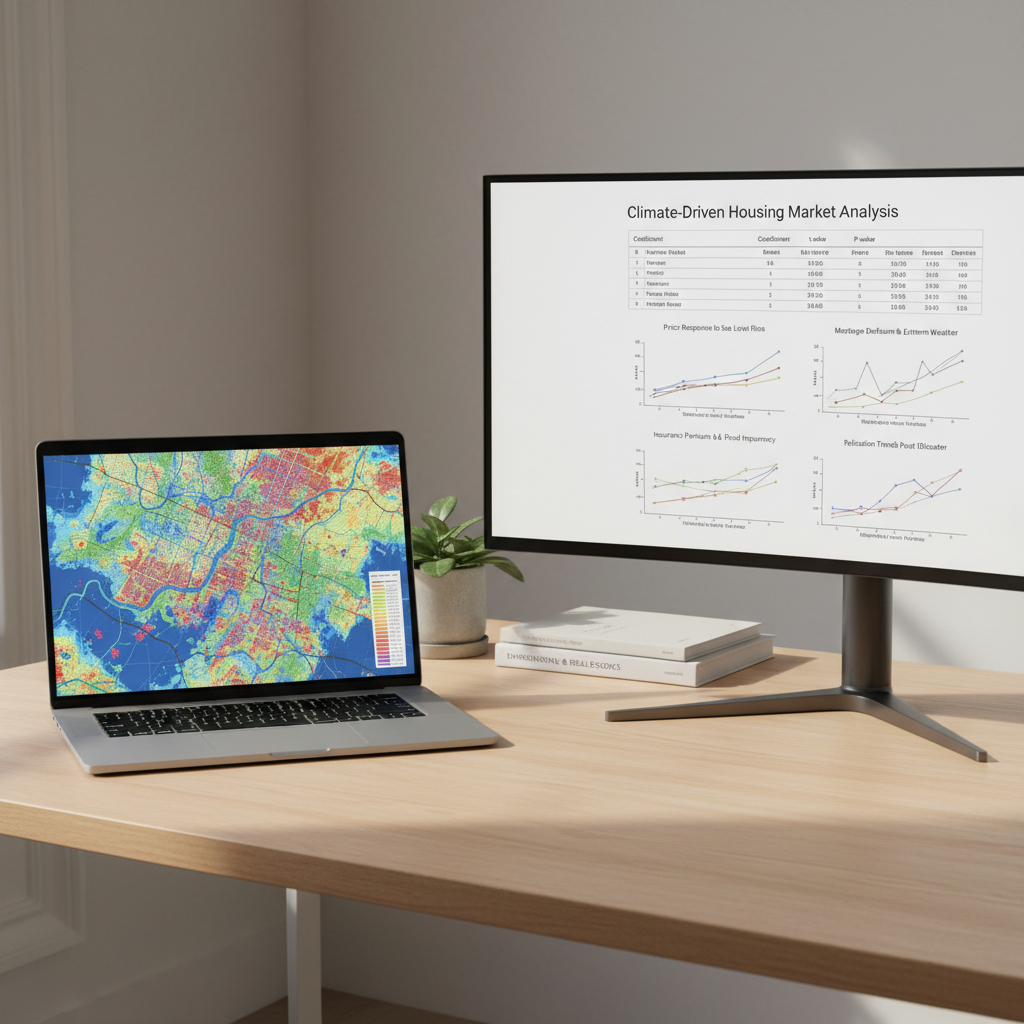
A meticulously organized modern workstation in photographic realism, featuring a slim, silver laptop displaying a colorful choropleth map of housing prices and flood risk indicators across a metropolitan area. Next to it, an ultra-wide monitor shows a clean regression output table and a multi-panel chart of climate-related housing market responses. The desk surface is smooth light wood, with a single small potted plant and a closed stack of academic-looking reports with plain, minimalist covers. Soft daylight from an unseen window to the left casts even, natural illumination with faint directional shadows, highlighting the screens without glare. Shot from a slightly elevated eye-level angle, the composition follows the rule of thirds, with a calm, professional atmosphere that conveys rigorous, data-driven research in environmental economics.

Teaching

Exploring how climate and policy shape housing markets, risk, and real estate decision-making.

Pedagogy

I teach courses connecting environmental economics, climate risk, and real estate, emphasizing empirical tools, transparent communication, and policy-relevant applications that prepare students to evaluate housing markets under climate change and evolving disclosure regulations.
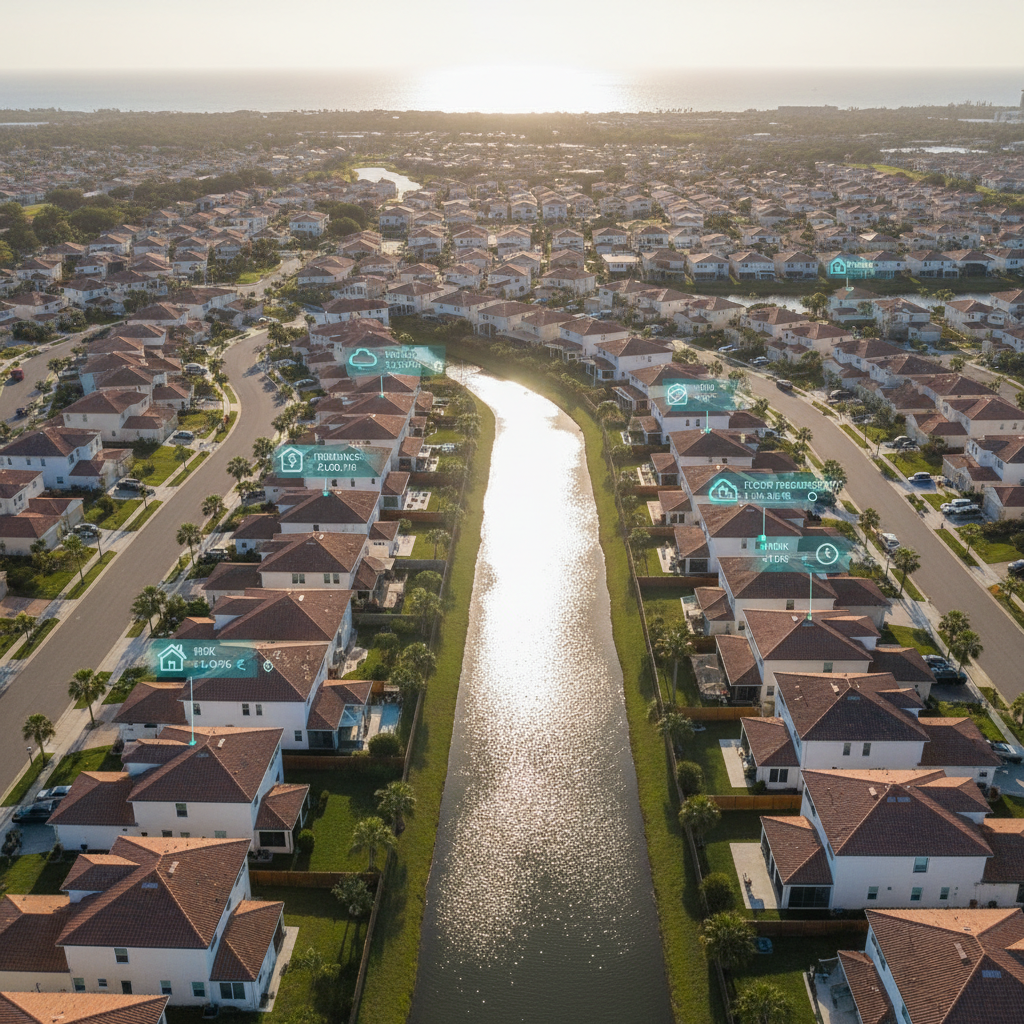
An aerial, photographic view of a suburban coastal subdivision at golden hour, where nearly identical houses line curving streets. A thin, reflective canal snakes behind some backyards, its water catching the warm, low-angle sunlight. Several houses nearest the canal have subtle visual cues of elevated foundations and flood vents, while farther homes appear at grade, referencing heterogeneous flood risk. Overlaid semi-transparent infographics hover cleanly over select rooftops, showing tiny icons for insurance costs, property values, and projected flood frequencies. The lighting is warm and directional, casting long, soft shadows that emphasize topography and proximity to water. The composition is wide and panoramic with sharp focus, creating a serene yet contemplative mood about climate risk, information frictions, and real estate markets.

Collaborators

A close-up, photographic shot of a dense stack of property disclosure documents and environmental reports on a minimalist grey desk, each with clearly legible but generic titles like “Flood Risk Disclosure,” “Climate Exposure Report,” and “Housing Market Impact Study.” Colored sticky-note tabs protrude from the edges, forming a gradient of blues and greens that evoke water and environmental themes. A transparent ruler and a fine-point pen rest neatly beside the stack, suggesting careful quantitative analysis. Soft, overhead diffused lighting eliminates harsh shadows, emphasizing texture in the paper and gentle reflections on the pen. Shot from a slightly angled overhead perspective with shallow depth of field, the front document is in crisp focus while the rest blur subtly, creating a professional, contemplative mood about how information and mandates shape housing decisions.

Aarav Sharma

CEO

Doctoral collaborator analyzing flood disclosure policies and how risk information reaches homebuyers and renters.
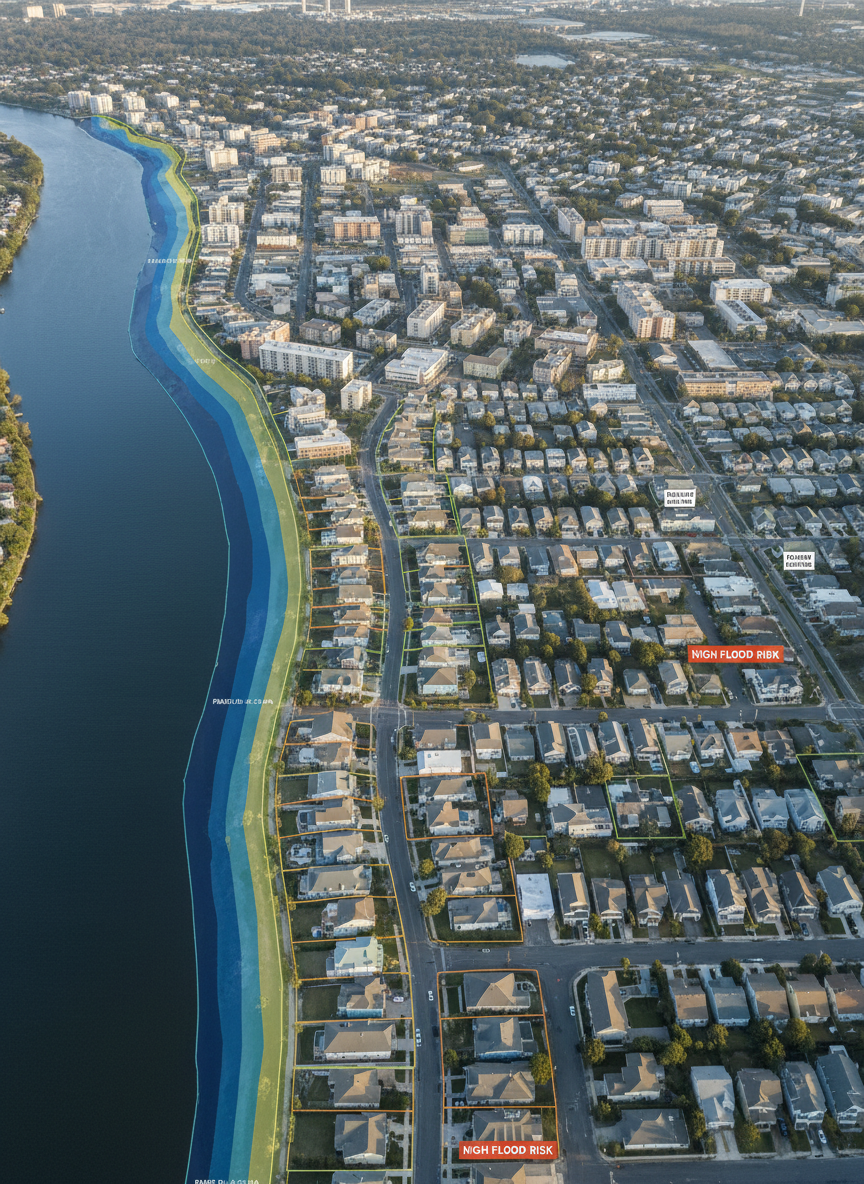
A large, detailed top-down photographic view of a coastal city neighborhood, with rows of varied single-family houses and mid-rise apartment buildings in muted coastal colors. A wide river curves along one edge, with clear demarcations of a FEMA-style floodplain overlay in semi-transparent blue and yellow tones integrated into the landscape. The scene is lit by soft, diffused late-afternoon light that creates gentle shadows but no harsh contrast, emphasizing clarity and legibility. The composition uses sharp focus throughout, with subtle labels on parcels and a few highlighted properties to suggest differential flood risk. The mood is analytical yet calm, conveying evidence-based environmental economics. Clean, modern mapping aesthetics and photographic realism blend to feel like a high-end research visualization of housing and flood risk.

Mateo García

CTO

Research assistant supporting spatial data work on sea-level rise, housing affordability, and adaptation policy.
A dimly lit, high-resolution photographic scene of a quiet residential street during a heavy evening rain, with water pooling along the curbs and subtly creeping up the edges of driveways. Streetlights cast warm, diffuse circles of light that shimmer on the wet asphalt, while darker, unlit areas recede into soft shadow. Some houses show small sandbag barriers or elevated entryways, hinting at prior flood experiences, while others appear unprotected. The camera is positioned at curb height, looking down the street with a gentle leading line perspective that draws the eye into the distance. Reflections of light in the shallow water create a calm but slightly uneasy atmosphere, symbolizing the intersection of everyday housing life and growing climate-related flood risk.

Zuri Ndlovu

Engineer

Teaching fellow co-designing case-based modules on climate risk, mortgage markets, and household decision-making.

A meticulously organized modern workstation in photographic realism, featuring a slim, silver laptop displaying a colorful choropleth map of housing prices and flood risk indicators across a metropolitan area. Next to it, an ultra-wide monitor shows a clean regression output table and a multi-panel chart of climate-related housing market responses. The desk surface is smooth light wood, with a single small potted plant and a closed stack of academic-looking reports with plain, minimalist covers. Soft daylight from an unseen window to the left casts even, natural illumination with faint directional shadows, highlighting the screens without glare. Shot from a slightly elevated eye-level angle, the composition follows the rule of thirds, with a calm, professional atmosphere that conveys rigorous, data-driven research in environmental economics.

Leila Haddad

Designer

Undergraduate mentee developing a senior thesis on flood insurance, neighborhood change, and housing equity.